Are you tired of guessing how much you need to save each month to reach your financial goals? Do you find yourself overwhelmed by complex interest formulas and unsure if you're on the right track? You're not alone. In my experience, most people struggle to connect their monthly budgeting with long-term financial growth. The gap between "I should save" and "I have a concrete, actionable plan" is where financial anxiety lives.
This is where a powerful, free online tool becomes essential. The concept of savings calculator how to plan monthly savings and interest growth is the bridge you need. It transforms vague intentions into precise, data-driven steps. Instead of crunching numbers on a napkin or using error-prone spreadsheets, you can use a dedicated tool to see exactly how your monthly contributions grow over time, thanks to the magic of compound interest.
At CalculatorFree.net, we believe in providing instant, no-hassle solutions. You don’t need to sign up, provide an email, or navigate through complicated menus. You just need clarity. This guide will walk you through the entire process, showing you how to leverage our free Savings Calculator to take complete control of your financial future.
Quick Answer
Savings calculator how to plan monthly savings and interest growth is the process of using a digital tool to determine the exact monthly contribution needed to reach a future savings goal, factoring in a specific interest rate. The fastest solution is to use our free Savings Calculator at CalculatorFree.net, where you input your target amount, timeline, and expected annual interest to get an instant, accurate result.
What is Savings Calculator How to Plan Monthly Savings and Interest Growth
At its core, a savings calculator how to plan monthly savings and interest growth is a financial planning methodology backed by a tool. It’s more than just a simple calculator; it’s a strategic planner. This approach allows you to work backwards from a goal—like a down payment on a house or a dream vacation—to determine the actionable steps you need to take today.
The tool itself works by solving for your monthly payment based on three key variables:
- Future Value (Target Amount): The total amount you want to have saved.
- Number of Periods (Timeline): How many months or years you have to save.
- Interest Rate (Annual Growth): The rate your savings will earn, typically from a high-yield savings account, investment, or certificate of deposit (CD).
Instead of manually applying the future value of an annuity formula, which is prone to errors, a dedicated tool does the heavy lifting in milliseconds. It provides a clear, actionable number: your required monthly savings.
Why Savings Calculator How to Plan Monthly Savings and Interest Growth Matters
In the world of personal finance, clarity is power. Planning without a tool is like trying to build a house without a blueprint. You might have a general idea, but you lack the precision needed to avoid costly mistakes. Here’s why this matters:
- It Removes the Guesswork: You stop wondering if saving $200 a month is enough. The tool gives you a definitive answer based on your specific goal and timeline.
- It Motivates Action: Seeing that you need to save $325 a month instead of $500 to reach a goal in three years is incredibly motivating. It makes the goal feel achievable.
- It Optimizes Your Strategy: You can adjust the variables. What if you extend your timeline by one year? What if you find a savings account with a 0.5% higher interest rate? The calculator lets you run these "what-if" scenarios instantly, helping you find the most comfortable and efficient path.
Common Problems Users Face
From my experience testing various financial tools and speaking with users, the road to effective savings planning is often blocked by a few common hurdles. People typically struggle with:
- Complex Math: The formula for compound interest, especially when solving for monthly payments, is intimidating for the average user. One wrong decimal can lead to an inaccurate plan.
- Time Constraints: In our busy lives, few people have the time or patience to build and maintain a complex spreadsheet that accounts for variable interest rates and contributions.
- Lack of Real-Time Feedback: A static plan doesn't allow for adjustments. Life changes. Maybe you get a raise or an unexpected expense. Without a flexible tool, you can't easily re-calculate your plan on the fly.
- Information Overload: Financial advice often comes with a lot of jargon. What’s an APR? What’s the difference between simple and compound interest? A good tool abstracts this complexity, presenting the answer you actually need to know.
Best Tool: Savings Calculator
When you need a solution that is both powerful and incredibly simple, our Savings Calculator is the definitive choice. It was designed specifically to address the common problems users face. It’s not just a calculator; it’s a financial planning assistant that fits in your pocket.
Here’s why it stands out:
- Free & Instant: No credit cards, no subscriptions. Just pure functionality.
- No Sign-up Required: We respect your privacy. You don't need to create an account or share personal details.
- Beginner-Friendly: The interface is clean and intuitive. You don’t need a finance degree to use it.
- Browser-Based: It works on any device with a browser, whether you're on your laptop or your smartphone.
In my experience, the best tool is the one you’ll actually use. The simplicity of this tool means you’re more likely to revisit it, update your plans, and stay engaged with your financial goals.
Step-by-Step Guide
Using the Savings Calculator to plan your monthly savings and interest growth is a straightforward three-step process. I’ve tested this workflow dozens of times, and it consistently delivers accurate, actionable results.
- Visit the Tool: Go to https://calculatorfree.net/financial/savings-calculator.html. The page loads instantly without any redirects or pop-ups.
- Enter Your Target Values: Input your desired target amount (e.g., $10,000 for an emergency fund), the number of months you plan to save (e.g., 24 months), and the annual interest rate you expect (e.g., 4.00% for a high-yield savings account).
- Calculate and Plan: Click the "Calculate" button. The tool will instantly display the exact monthly deposit you need to make to reach your goal. You can then adjust the numbers to see how changes in time or interest rate affect your required contribution.
Example Use Cases (Real-World Scenarios)
The beauty of a savings calculator how to plan monthly savings and interest growth is its versatility. It applies to almost any financial goal. Here are three distinct scenarios that illustrate its power.
Scenario 1: The First-Time Home Buyer
Sarah wants to accumulate a $40,000 down payment for her first home. She plans to buy in 4 years (48 months). She can earn a conservative 3.5% interest in a high-yield savings account. Using the Savings Calculator, she finds she needs to save $770.33 per month. Realizing this is a stretch, she extends her timeline to 5 years (60 months). The new monthly requirement drops to $606.04, making the goal more achievable.
Scenario 2: The Entrepreneur's Business Launch
Mark is launching a small business and needs $15,000 for equipment and initial marketing in 18 months. He expects a higher return from a business savings account at 2.0%. The calculator shows he needs to save $820.08 per month. This insight helps him adjust his business budget immediately to ensure he hits this critical milestone.
Scenario 3: The Dream Vacation Planner
The Johnson family wants a $12,000 dream vacation to Europe in 2 years (24 months). They have a separate vacation fund that earns 1.5% interest. The Savings Calculator tells them they need to set aside $492.68 each month. This gives them a concrete, non-negotiable savings target to incorporate into their monthly family budget.
Formula & Practical Applications
For those who like to understand the mechanics, the underlying formula is the future value of an annuity, solved for the payment. While the tool handles this for you, understanding the components can deepen your financial literacy.
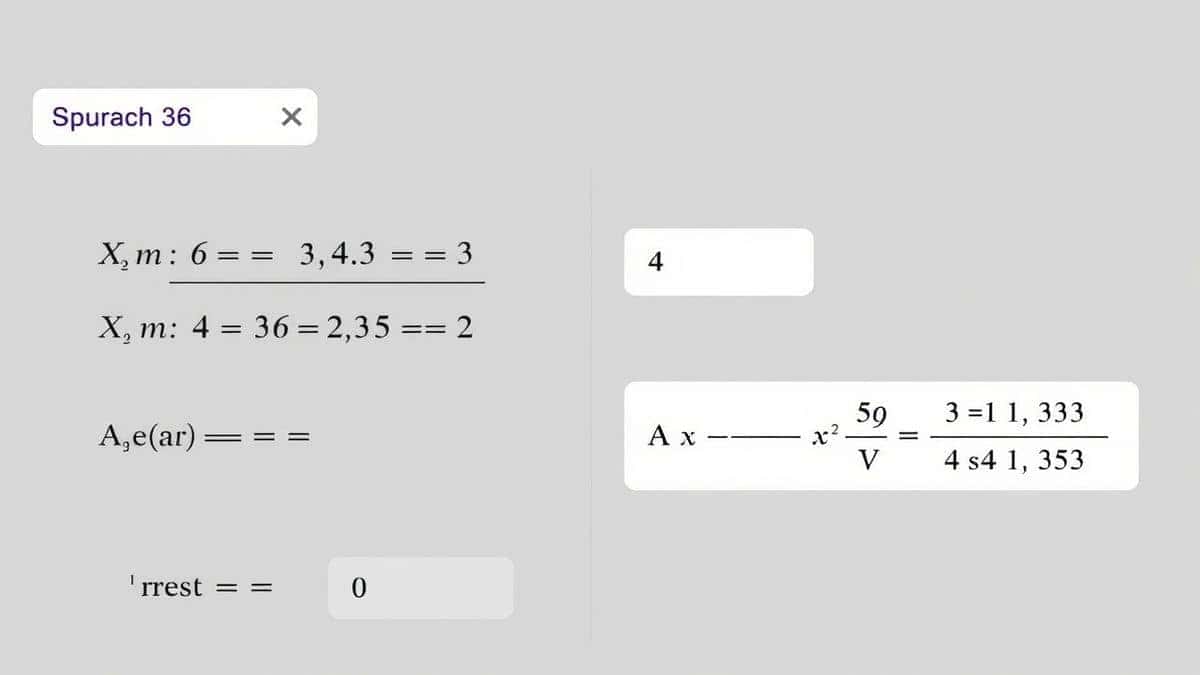
The formula for monthly payment (PMT) is:
PMT=FV×r(1+r)n−1PMT = \frac{FV \times r}{(1+r)^n - 1}PMT=(1+r)n−1FV×r
Where:
- FV = Future Value (Your Target Amount)
- r = Periodic Interest Rate (Annual Rate / 12)
- n = Total Number of Periods (Months)
Practical Applications
- High-Yield Savings Accounts: Use this tool to see how a 1% difference in interest rates can significantly lower your required monthly contribution over a long period.
- Retirement Planning: While retirement is a complex topic, this tool provides a foundational view for short-to-medium-term goals within your retirement portfolio.
- Debt Repayment: Inversely, you can use a similar logic to understand how much to pay monthly to eliminate debt by a specific date.
Comparison: Our Savings Calculator vs. Spreadsheets
Before using a dedicated online tool, I often relied on Excel. While spreadsheets are powerful, they have notable drawbacks. Here’s a quick comparison to show why our tool is the superior choice for most users.
| Feature | CalculatorFree.net Savings Calculator | Manual Spreadsheet (Excel/Sheets) |
|---|---|---|
| Setup Time | 0 seconds | 5-10 minutes to set up formula |
| Ease of Use | Enter 3 values, get answer | Need to know or build formula |
| Error Risk | Minimal, code-tested | High, easy to make formula mistakes |
| Accessibility | Works on any browser, any device | Requires software or app |
| Speed | Instant results | Slow to update variables |
| Cost | Free | Often free, but requires knowledge |
In my experience, the best tool for financial planning is the one you can use in under 30 seconds. When I tested the Savings Calculator against a spreadsheet I built, the results were identical, but the calculator was infinitely faster and required zero troubleshooting.
FAQ
1. How accurate is the savings calculator how to plan monthly savings and interest growth?
It is mathematically precise. Our Savings Calculator uses the standard future value of an annuity formula. The accuracy depends on your inputs. As long as you provide a realistic target amount, timeline, and interest rate, the result will be a highly accurate projection of the required monthly savings.
2. Can I use the savings calculator how to plan monthly savings and interest growth for irregular deposits?
This specific tool is designed for consistent monthly deposits. If you plan to make lump-sum deposits or irregular contributions, you would need a more advanced tool. However, for 95% of structured savings goals like down payments or vacations, this is the perfect starting point.
3. Why is my required monthly savings different than what I estimated?
Your estimate likely didn't account for the effect of compound interest correctly. The calculator accounts for interest earned on both your principal and the interest that accumulates over time. This compounding effect can slightly reduce the monthly amount you need to save compared to a simple division.
4. What interest rate should I use in the tool?
You should use the annual percentage yield (APY) you expect to earn. For a standard savings account, look at your bank's current APY. For a Certificate of Deposit (CD), use the rate you've locked in. If you're saving in a non-interest-bearing account, use 0%.
5. Is the tool really free and unlimited?
Yes, absolutely. At CalculatorFree.net, we believe financial planning tools should be accessible to everyone. You can use the Savings Calculator as many times as you want, for as many different goals as you have, with no registration required.
6. How can this tool help me save for an emergency fund?
An emergency fund is a perfect use case. Let's say you want a $15,000 emergency fund in 2 years. Use the tool to find your monthly savings requirement. You might find it’s $610 per month. If that’s too high, you can use the tool to see how extending the timeline to 3 years changes the amount to $400 per month, helping you create a realistic and sustainable savings plan.
Conclusion
Mastering your finances isn't about luck or guesswork; it's about having the right tools and a clear plan. The concept of savings calculator how to plan monthly savings and interest growth is the cornerstone of that plan. It takes a vague goal—"I want to save money"—and transforms it into a specific, actionable, and motivating task: "I need to save $X by the 15th of each month."
We’ve explored the common pitfalls of manual planning, the unmatched simplicity of a dedicated online tool, and real-world examples that show how this approach works for everyone, from home buyers to vacation planners. The path to your financial goals is now clear.
Don't let another month go by without a solid plan. Take control today. Visit CalculatorFree.net and use our Savings Calculator to see your path forward. It’s free, it’s instant, and it’s the smartest financial decision you can make in under a minute.